
 Total View: 101
Submitting the form below will ensure a prompt response from us.
Search engine visibility plays a crucial role in the success of any web application. While Laravel is widely loved for its elegant syntax, MVC architecture, and scalability, developers often overlook a critical aspect: SEO optimization. Laravel applications can rank exceptionally well on search engines if you use the right techniques, tools, and architectural patterns.
This guide explains why Laravel SEO requires a strategic approach, followed by the top best practices—complete with code snippets—to help you build search-friendly Laravel applications.
Laravel itself doesn’t create SEO challenges—the way dynamic content is generated does. Many Laravel applications rely heavily on server-rendered templates, dynamic routes, and database-driven content. While this offers flexibility, it also introduces SEO considerations such as:
Unlike frontend-heavy frameworks, Laravel’s backend-first approach gives you strong control over SEO, but only if configured properly.
Below are the most effective SEO techniques to optimize your Laravel app for both users and search engines.
Search engines rely heavily on meta tags like title, description, and keywords to understand and rank pages.
Example Using Blade:

resources/views/layouts/app.blade.php

head
    title: yield('meta_title', 'Default Laravel Title')
    meta name="description": yield('meta_description', 'Default description')
endhead

Usage:

extends('layouts.app')

section('meta_title', post.title)
section('meta_description', Str::limit(post.content, 150))
————————-Tested code—————-
<head>
    <title>@yield('meta_title', 'Default Laravel Title')</title>
    <meta name="description" content="@yield('meta_description', 'Default description')">
</head>
Usage:
@extends('layouts.app')

@section('meta_title', $post->title)
@section('meta_description', Str::limit($post->content, 150))
This ensures each dynamic page gets unique metadata.
Readable URL slugs improve both rankings and user experience.
// routes/web.php

Route::get('/blog/{slug}', [BlogController::class, 'show']);

// Blog model

public function getRouteKeyName()

{

return 'slug';

}

Laravel’s Str::slug() helps generate clean slugs:

$post->slug = Str::slug($post->title);
A sitemap helps Google discover and index your pages more effectively.
Use the package:
composer require spatie/laravel-sitemap
Generate a sitemap:
use Spatie\Sitemap\Sitemap;

use Spatie\Sitemap\Tags\Url;

Sitemap::create()

->add(Url::create('/'))

->add(Url::create('/blog'))

->writeToFile(public_path('sitemap.xml'));
Schedule nightly generation:
$schedule->command('sitemap:generate')->daily();
SEO and performance go hand-in-hand. Laravel provides tools to enhance speed:
php artisan route:cache
Cache::remember('blog_posts', 3600, function () {

return Post::latest()->get();

});
Schema helps Google display rich snippets.
Example for blog posts:
[script type="application/ld+json"]
{
    "@context": "https://schema.org",
    "@type": "BlogPosting",
    "headline": "{{ $post->title }}",
    "description": "{{ Str::limit($post->content, 150) }}",
    "author": {
        "@type": "Person",
        "name": "{{ $post->author->name }}"
    }
}
[/script]
Blade example:
[link rel="canonical" href="{{ url()->current() }}" /]
This helps avoid search ranking penalties.
Avoid URL parameters like ?page=1.
Use the paginator:
$posts = Post::paginate(10);

Then in the Blade:

{{ $posts->links() }}
Laravel automatically generates crawl-friendly page URLs.
Search engines prioritize secure websites.
Use the package:
composer require bepsvpt/secure-headers
Add middleware:
return $next($request)
->header('Strict-Transport-Security', 'max-age=31536000; includeSubDomains');
Want better search visibility for your Laravel app? Our experts help you implement powerful Laravel SEO strategies for faster, scalable growth.
Laravel makes it incredibly easy to build modern, high-performing applications—and with the right SEO practices, those applications can compete strongly in search results as well. By implementing dynamic meta tags, optimizing URLs, improving performance, generating sitemaps, and adding structured data, you give Google the information it needs to index your pages accurately and rank them higher.
Effective Laravel SEO isn’t a one-time task—it’s a continuous process of optimizing code, content, and performance. With a strong backend foundation and thoughtful SEO implementation, your Laravel application can achieve exceptional visibility, better user engagement, and stronger long-term organic growth.
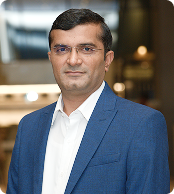
At the core, Moon Technolabs is driven by the vision, sharpness and flourished under the leadership quality led by none other than the founder & CEO i.e, Mr. Jayanti Katariya. His simple-approach & never-give-up attitude is the virtue or rather aptitude that the entire team tries to grasp and follow. From client relations to business development, from industry updates to floor walking, he does everything in his power to provide support to the team.


Submitting the form below will ensure a prompt response from us.
We refine our expertise to deliver innovative business solutions.





205 N Michigan Avenue, #810, Chicago, 60601, Illinois, United States
13500 Long Is Dr, Pflugerville, TX 78660, USA

C/105 Ganesh Meridian, S.G. Highway, Ahmedabad, GJ 380060


Ayse D.
Co-Founder France
“ I highly recommend Moon Technolabs as the quality of service is wonderful. We have hired this company to develop the product based on some complex & technical issues. We get the best quality services as compared with others in the market. Huge Thanks to Moon Technolabs as the team is always ready to give the solution all time.”

Justin G.
Founder & CEO USA
USA“ Moon Technolabs is a pioneer in the WebRTC based project as they have fixed complicated segments of the module by fulfilling different product lines by providing 24X7 customer support. We really recommended Moon Technolabs as they are able to develop products as per the module deadline and project timeline.”

Flavio S.
Founder & Managing Director Germany
“I am happy to recommend Moon Technolabs for their app development services. They successfully developed apps for me, and I am highly satisfied with the overall outcomes. The development team has swiftly addressed the issues with responsive and effective communication to understand the requirement quickly and actively resolve the back-and-forth problems that arose...”

Jay M.
Founder & CEOUSA“Moon Technolabs is the best company that provides advanced apps and websites development services in the USA and Europe. I am a newbie to develop my app with an external team. I am really happy to work with them as I am not that much mobile apps user. Here, the team and specially the CEO of Moon Technolabs helps me to let me know about the benefits of my app to generate revenue....”


Our Offices
India
C/105 Ganesh Meridian,S.G. Highway, Ahmedabad, GJ 380060USA
205 N Michigan Avenue, #810, Chicago, 60601, Illinois, United StatesContact Information